Education Center
Here to Help. Always.
VIP REBATE ROUND UP! Save over $300 with rebates and instant savings today!
Goodyear, Cooper, Kelly, Vredestein, Michelin, BF Goodrich, Milestar, and General Tire!
Book Online!

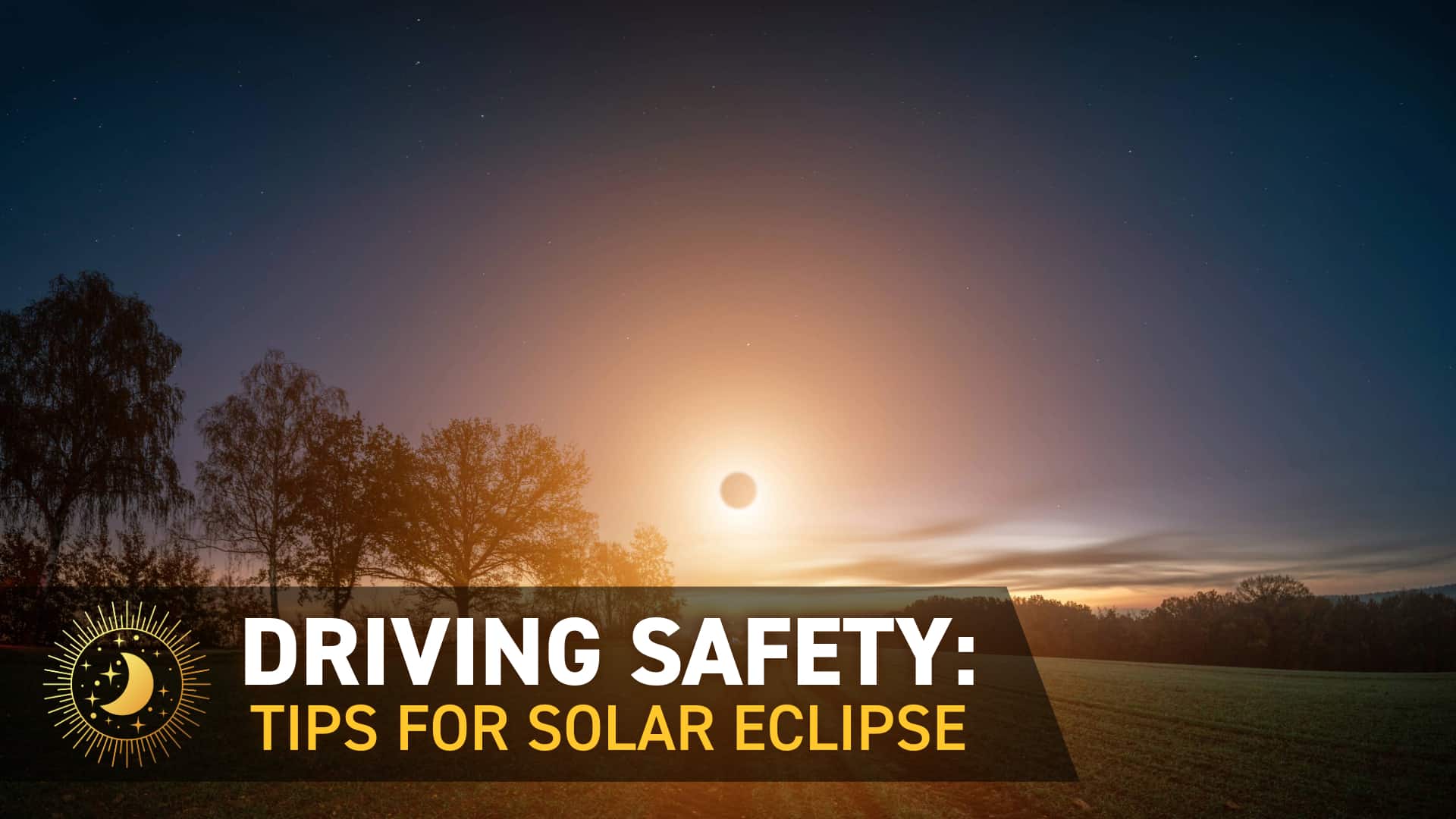
The last time the state of Maine had a total solar eclipse over us was in 1963, and according to experts, the next one will not be until 2079. For some, this rare and awe-inspiring event may be a once-in-a-lifetime experience. So, as we prepare to witness this celestial phenomenon, it’s crucial to consider how the total solar eclipse will affect us on the ground and especially behind the wheel. Driving during a solar eclipse requires a heightened sense of awareness and preparedness. Whether you’re a seasoned driver or a newcomer to eclipse-watching, these essential driving tips are tailored for navigating the shadows with confidence during the upcoming solar eclipse.
 it can cause severe eye damage. Exposing your eyes to the sun without proper protection during a solar eclipse can cause “eclipse blindness” or retinal burns. This solar retinopathy can be permanent and cause blurred or altered vision or other damage. Instead, be sure to use your visor to block the sun. While it might be tempting to wear eclipse glasses while driving to view the spectacular sight safely, they’re more intense than regular sunglasses. They can block out all visible light, making it incredibly dangerous to wear while driving.
Remember, your safety and well-being behind the wheel are paramount, whether it’s the April 2024 eclipse or any future cosmic event. Driving during a solar eclipse is a unique adventure requiring caution, awareness, and appreciation for the natural world. By following the tips and guidelines shared in this blog, you’ve not only ensured your safety on the road but also maximized your enjoyment of this rare cosmic spectacle.
If you run into any issues during your eclipse adventures, you can always turn to your local VIP. With 70 locations, there’s one around the corner, open seven days a week.
Read More
Read More
Read More
Read More
Be the first to know about deals, rebates, and more!
Log in or Create an account to save vehicles and more.
 All-Season
 All-Weather
 All-Terrain
 Winter
All-Season tires are versatile and suitable for warm and cool climates, but not recommended for extreme hot or cold weather conditions because of specific rubber components.
Like their name suggests, all-weather tires are versatile and can perform well in a variety of weather conditions and can be severe snow-rated.
With bigger treads than traditional all-season tires, all-terrain tires allow for both on and off-roading capabilities.
Winter tires are manufactured to perform well in snow, ice, sleet and other cold weather conditions. Winter tires are typically soft, with an intricate grooved tread pattern — made for holding compacted snow and creating traction — and are severe snow-rated.