Buy 4 tires installed with Tire Maintenance++ and an alignment – save $100 INSTANTLY!
Shop today!

Skip to content

Education Center

Here to Help. Always.

Your Car Maintenance Schedule — Recommendations + Chart

Written by: Colleen Chassie
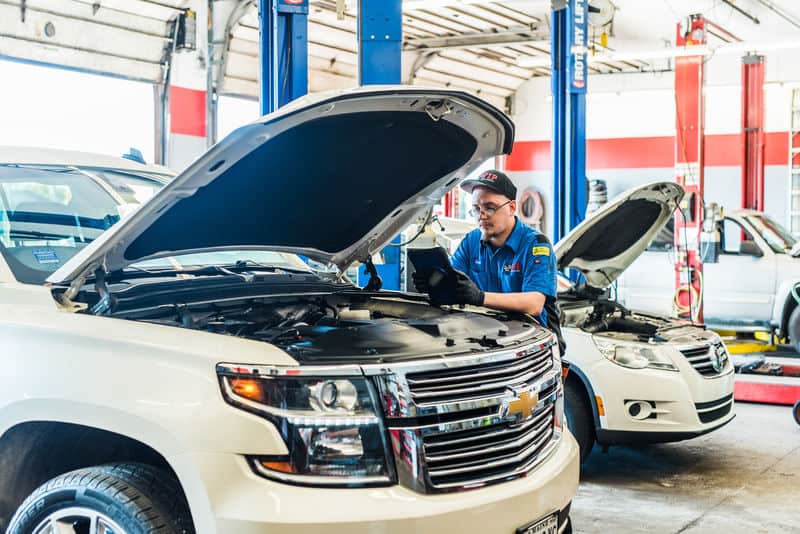
Technician performing MPI with a tablet

When was the last time you brought your car in for regular maintenance?

According to IMR Automotive Research, almost 8% of people delay routine maintenance for their vehicles. As for why, 33% percent cite inconvenience, and another 30% are worried about the cost.

While those concerns are understandable, it’s a mistake to delay your car’s regular maintenance. Following a regular schedule is important for addressing wear and tear and helping to prevent any major problems. Plus, according to Kelley Blue Book, keeping a detailed vehicle maintenance history helps to improve your car’s resale or trade-in value.

It’s inevitable that every vehicle will require more maintenance as it gets older and hits a higher mileage — but the few hundred dollars a year you spend on maintenance and repair will provide:

Here’s what you need to know about having a regular vehicle maintenance schedule to keep your car in good working order and reduce the risks of expensive repairs.

Basic Car Maintenance Schedule

First, consult your owner’s manual to see any specific maintenance recommendations that your vehicle’s manufacturer may require. Discuss maintenance updates with your mechanic or service provider for more insights into services for specific makes and models.

In general, you can’t go wrong by following these basic guidelines for vehicle maintenance.

Regular oil changes

If your vehicle has an internal combustion engine you will need a regular oil change depending on your oil type. The old adage of having to do an oil change every 3,000 miles has become outdated with newer advances in oil quality and engine design. Your owner’s manual will have specific recommendations for regular oil changes and newer vehicles will have displays that alert about recommended changes. The general recommendations are:

  • Non-synthetic oil requires changing every 5,000 miles
  • Synthetic oil requires changing every 10,000 miles
  • Fully electric vehicles do not require oil changes

Tire care

Your tires receive the most wear from regular driving. To be safe, you should regularly check the condition of your tires, especially before or after long trips.

  • Check the side of your tire for its recommended air pressure and use a tire gauge to ensure the pressure is correct.
  • Look over the tire for any signs of damage and to check its tread depth. You can use the penny test for a quick check — if you can see all of Abe Lincoln’s head when the penny is head down in the tread groove, then you need new tires.
  • Perform a tire rotation every 6,000-8,000 miles to even out the wear across your tires.
  • If it’s been more than three years since your last tire alignment, or if you notice that your car is drifting or your steering column is vibrating, then it’s time to get your steering aligned.

For more in-depth information about the importance of tire rotation and alignment, see our guide on our companion blog post.

Brake inspections

Your car’s brakes should be inspected once a year, though that depends on how often you drive and if you’ve had a lot of hard braking moments. Your brake pads and rotors will eventually wear out. If braking feels “spongy,” if you hear grinding or squealing when braking or if your dashboard is displaying a brake warning light — then you need to bring your car in for a brake inspection.

General car maintenance

Other important monthly check-ups include the following:

  • Have the “check engine” light looked at to ensure that it’s working properly. You don’t want to miss that alert if there’s something wrong.
  • Make sure that all exterior and interior lights are fully operational. If they’re dim or beginning to flicker, then you need to replace them.
  • If your headlamp lenses are cloudy or discolored they need to be cleaned. You can have it done professionally or try a DIY with glass cleaner and/or a vinegar and baking powder solution.
  • Check that all your fluid levels are correct, including your windshield wiper fluid. Fill them to the recommended levels if they’re too low. You may also want to switch between summer and winter fluids. Summer washer fluid works well in hot conditions while winter fluids are designed to protect against freezing temperatures.
  • It’s always a good idea to clean the interior and exterior of your car. Too many objects in a car can lead to distracted driving, and dirty interiors can cloud up your windows. Wash your car regularly to remove dirt, grime, and road salt — all of which will rust and corrode your car.

Regular vs. Severe Service Requirements

Those are the recommendations for general conditions. Depending on where you drive, how often, and local conditions you may need more frequent oil and fluid changes. Conditions that will wear down your vehicle faster include:

  • Frequent stop-and-go traffic and idling
  • Constant short commutes of five miles or less
  • Extreme hot or cold temperatures
  • High humidity
  • Dusty or salty environments
  • Travel on rough and/or mountainous roads
  • Carrying or towing heavy loads

If you’re commuting to Boston for work or taking regular trips into the mountains, you should be checking your car’s condition at least once a month. If you want to keep on top of everything your car needs, consult the following car maintenance checklist and schedule.

Car Maintenance Checklist

Roughly every 6,000 miles or every 6 months:

  1. Oil changes: Every 5,000-10,000 miles depending on oil type or at least every 12 months.
    • Severe weather or harsh driving conditions will require more frequent oil changes.
    • Even if you don’t drive often, you must replace your oil every 12 months.
    • Be sure to check the engine’s oil level before any long road trips.
    • An oil change will cost between $60-$200.
  2. Tire rotations and alignment: Tires should be rotated every 6,000-8,000 miles to ensure even wear.
    • Consider having your steering aligned during tire rotation.
    • Check your tire pressure to ensure they aren’t under- or over-inflated.
    • A tire rotation will cost between $25-$140.
  3. Engine air filter: Change the filter every 15,000-30,000 miles or at least every 12 months, depending on your environment, more often in city or desert areas, or during high pollen season.
    • A new engine air filter costs between $30-$85.
    • Six-month fluid check: Winter and summer months require different types of fluids for optimal performance.
    • Coolant: This is the mix of water and antifreeze that flows through your car engine’s radiator to keep it at the correct temperature. Low levels can cause your engine to overheat, which can cause severe damage. Coolant should be a 50/50 mix of water and antifreeze in summer, but winter coolant should have no water.
    • Windshield wiper fluid: Ensure you always have enough fluid to clean your windshield from dust and debris while driving. Switch between summer and winter wiper fluid for the best results.
    • Winter windshield wipers: If you use dedicated winter windshield wipers to better handle snowy and icy conditions, be sure to switch them out as the seasons change.

Roughly every 12,000 miles or every 12 months:

  1. Brake inspections: Brake pads and rotors should be inspected regularly to ensure they are in good condition.
    • Brake pad and rotor replacement costs range between $100-$350 per axle.
  2. Battery check: Batteries should be tested and cleaned as needed. Check your battery and cables for corrosion of leaking fluid on the top of the case.
    • Most batteries will last four or five years, which averages to around 50,000 to 60,000 miles.
    • A new car battery will cost between $60-$300.
  3. 12-month fluid check: Aside from the oil, all of the fluids in a car should be checked regularly to ensure they are at the proper level.
    • Brake fluid level: When brake fluid is contaminated by water, the brakes can become “squishy” and less responsive.
    • Transmission fluid: Low transmission fluid levels will cause shifting problems and can burn up the transmission.
    • Power steering fluid: Low power steering fluid will cause heavy steering or excessive noise while turning the wheel.
    • Depending on the condition of the fluid, they can be changed or flushed — a more expensive process that completely removes all traces of the old fluid from the system.
    • A brake fluid flush will cost between $85-$120.
    • A transmission fluid flush will cost between $125-$300.
    • A power steering fluid flush will cost between $70-$120.
  4. Cabin air filter: Besides filtering out contaminants like dust, pollen, and exhaust before they reach the inside of your car, cabin filters aid in the performance of your air conditioning and heating systems.
    • Cabin air filter replacement costs range between $60-$175.

Roughly every 30,000 miles or every 30 months:

  1. Belts and hoses: Belts and hoses should be inspected for signs of wear and replaced as needed.
  2. Suspension and steering: The suspension and steering systems should be checked to ensure they are in good working order.

As needed:

  1. Lights and wipers: Both should be checked regularly to ensure they are in good working order.
    • Windshield wipers: When you notice excessive streaking, constant squeaking, or loose parts, it’s time for a new pair. New windshield wiper blades can cost between $7-$90.
    • Headlights, tail lights, and interior lights: If your lights are dim or are starting to flicker, it’s important to get them replaced as soon as possible. New headlight bulbs can cost between $20-$100.
  2. Multipoint inspections: Your car should be taken in for regular inspections to identify any potential issues before they become major problems. Consider having one done every 5,000-7,0000 miles, though if your service technician offers it for free during a regular visit, take advantage.
  3. Tire replacement: How often you need to replace your tires depends on the type and quality of the tires, as well as your driving habits.
    • The cost of tires can vary greatly, from $50-$1,000+ per tire.
  4. Winterization and snow tires changeover: Living in the Northeast, this can be one service that’s entirely calendar based. Ensure that you’re ready for inclement weather with the proper snow tires, winter wipers, and the right levels of antifreeze.
    • Studded snow tires: If you use studded snow tires, be aware that Maine and Massachusetts require their removal by May 1. Studded tires are permitted in Vermont and New Hampshire with no restrictions.

Keep your vehicle in prime operating condition

Have you been performing regular maintenance on your vehicle? To help you keep full track of your vehicle’s needs, you can download our car maintenance calendar template that comes complete with its own monthly checklist.
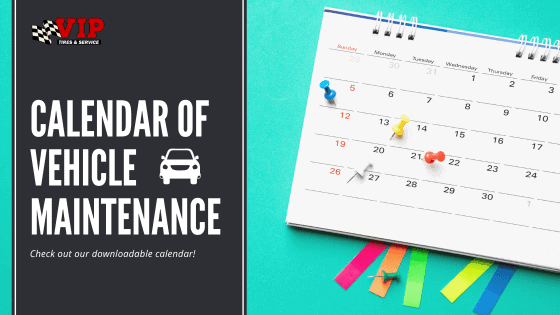
VIP Auto calendar of vehicle maintenance


If your vehicle is due for any of the services listed above, don’t delay — schedule a service appointment today to get started.

Visit us at one of over 70+ locations throughout the Northeast. Walk-ins Welcome!

Schedule Service Get a Free Quote

For Tires and Service Turn to VIP

Search By Vehicle
Search By Size
Select a vehicle from My Garage
Recent Searches
Saved Vehicles
OR
Search for a new vehicle
Tire Size
Where do I find my tire size?
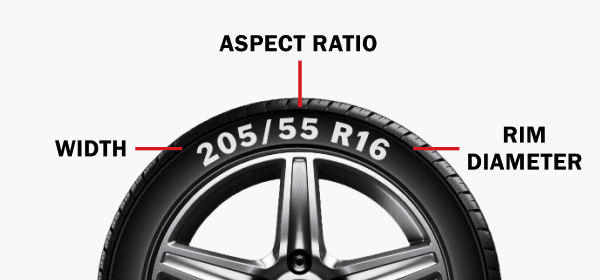
Tire Sidewall
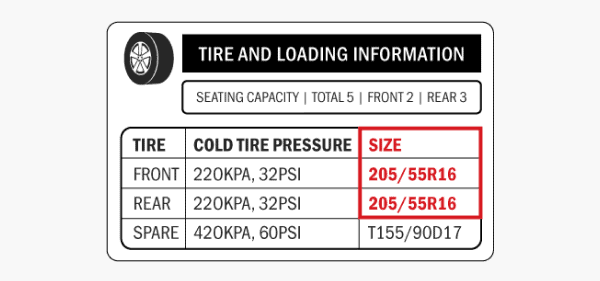
Inside Door Jamb
Tire Sidewall that shows width, aspect ratio, and rim diameter
tire and loading information found on the inside of a door jam
Add a different rear tire size
Please select a different rear size from the front
All-Season
All-Weather
All-Terrain
Winter

All-Season

All-Season tires are versatile and suitable for warm and cool climates, but not recommended for extreme hot or cold weather conditions because of specific rubber components.

All-Weather

Like their name suggests, all-weather tires are versatile and can perform well in a variety of weather conditions and can be severe snow-rated.

All-Terrain

With bigger treads than traditional all-season tires, all-terrain tires allow for both on and off-roading capabilities.

Winter

Winter tires are manufactured to perform well in snow, ice, sleet and other cold weather conditions. Winter tires are typically soft, with an intricate grooved tread pattern — made for holding compacted snow and creating traction — and are severe snow-rated.