Advanced Multi Point Inspection
Oil keeps many components of your engine working efficiently. Keep it performing optimally with a VIP oil change.
VIP REBATE ROUND UP! Save over $300 with rebates and instant savings today!
Goodyear, Cooper, Kelly, Vredestein, Michelin, BF Goodrich, Milestar, and General Tire!
Book Online!
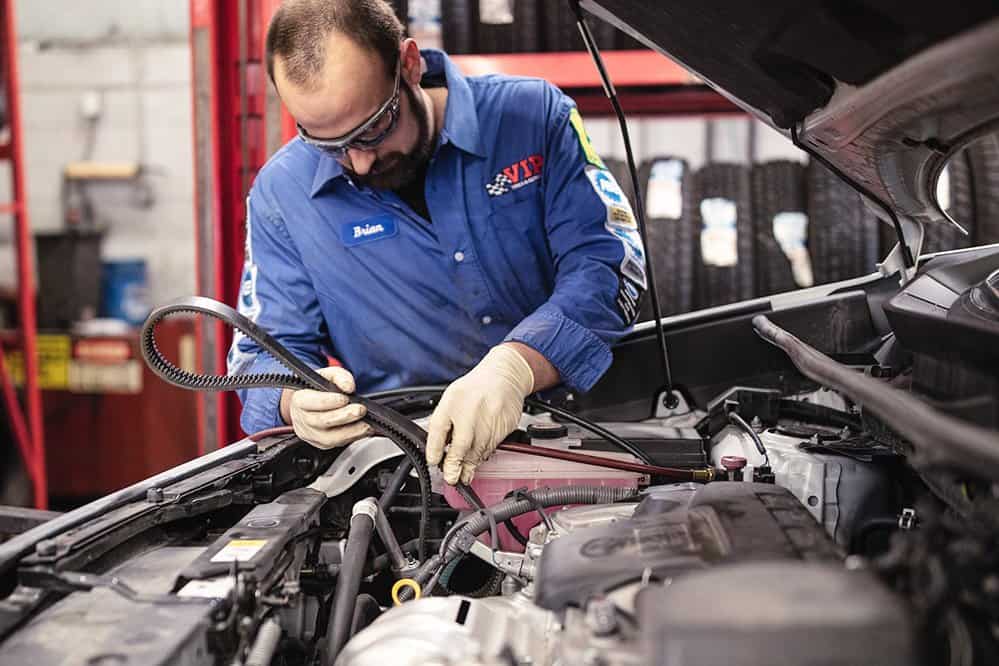
The timing belt is responsible for synchronizing your engine’s functions. If it fails, your engine will stop and serious engine damage can result.
Typically there are are no warning signs that your timing belt is in trouble — it just breaks! Therefore, it’s recommended that you replace it after 60,000 to 106,000 miles. Checking your owner’s manual will tell you the recommended interval for your vehicle.
VIP’s Certified Automotive Professionals can can give you a more accurate idea of the condition of your timing belt by visually assessing it and will let you know if replacement is recommended.

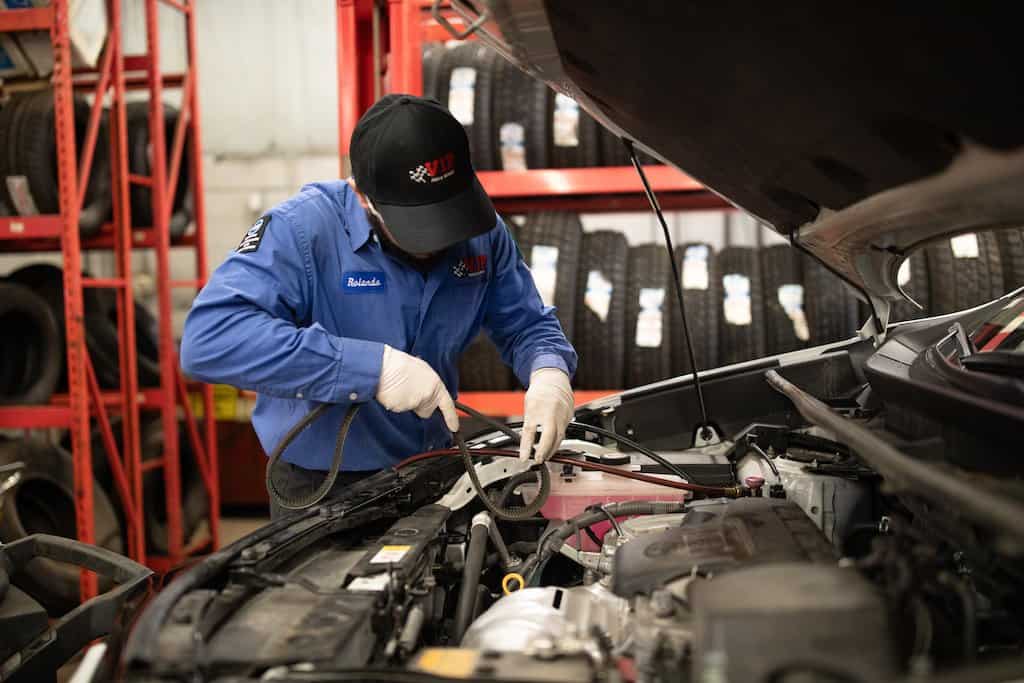
Replace your timing belt based on your owner’s manual recommendation or if it has cracks, cuts, is soaked in oil leaking from the engine or water from a leaking water pump, or shows signs of excessive wear.
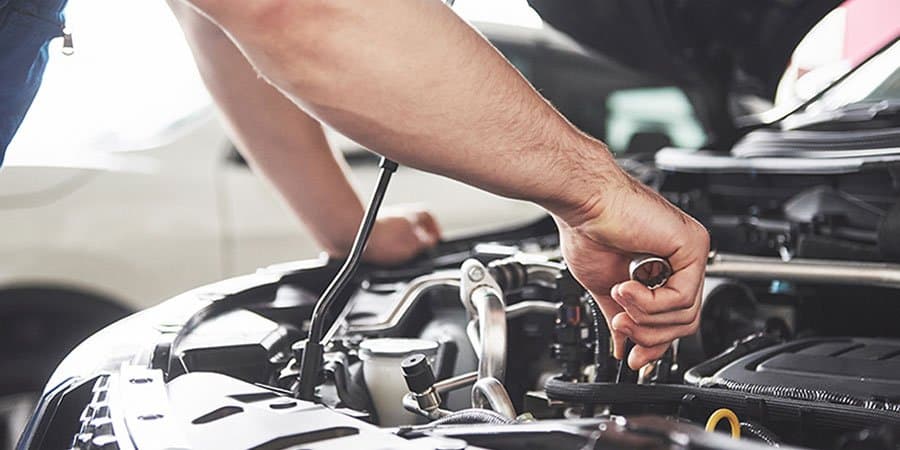
The timing belt is a rubber belt that controls the camshafts in your engine, opening and closing valves at just the right time for smooth operation. The timing belt has teeth that turn the camshaft in time with the crankshaft.


At VIP we understand what your car means to you. All of our employees, from our customer service representatives to our world-class ASE-certified master technicians believe in getting the job done right. We walk you through the work to be done before we begin, including live-feed reviews of your vehicle and copies of your multipoint inspection sent straight to your phone.
With over 32,000 positive Yelp and Google reviews you know you can trust us to be reliable, transparent, and sincere







If your timing belt is about to fail, you may not notice any warning signs because timing belts often fail without symptoms. That’s why our Certified Automotive Professionals recommend having your timing belt visually inspected during regular visits and replacing it based on your vehicle manufacturer’s mileage recommendations rather than waiting for signs of failure. Preventative maintenance and regular monitoring can help reduce the risk of unexpected breakdowns.
You should replace your timing belt based on your vehicle manufacturer’s recommendations, which are typically between 60,000 and 106,000 miles, though the interval can vary by vehicle. Check your owner’s manual for the recommended timing for your specific vehicle. When you get service at VIP Tires & Service, our Certified Automotive Professionals can make recommendations based on your mileage and visual inspections performed during our multi-point inspection.
If your timing belt breaks while driving, your engine could suddenly stop, and depending on your vehicle’s engine type, it may cause significant damage. That’s why it’s important to follow your manufacturer’s recommended replacement schedule rather than wait for a failure. If your timing belt breaks, safely guide your vehicle to the side of the road, turn on your hazard lights, and contact a reputable towing company to bring your vehicle to a trusted repair shop.
A timing belt keeps your engine’s camshaft and crankshaft moving in sync, which allows the engine’s valves to open and close at the correct time. It’s a small belt with a big responsibility.
You may be able to tell if your timing belt is worn by looking for signs like cracks, cuts, or oil and water contamination. However, some timing belt issues aren’t visible without a professional inspection. Our Certified Automotive Professionals know what to look for and can help identify potential problems with your timing belt.
Be the first to know about deals, rebates, and more!
Log in or Create an account to save vehicles and more.
 All-Season
 All-Weather
 All-Terrain
 Winter
All-Season tires are versatile and suitable for warm and cool climates, but not recommended for extreme hot or cold weather conditions because of specific rubber components.
Like their name suggests, all-weather tires are versatile and can perform well in a variety of weather conditions and can be severe snow-rated.
With bigger treads than traditional all-season tires, all-terrain tires allow for both on and off-roading capabilities.
Winter tires are manufactured to perform well in snow, ice, sleet and other cold weather conditions. Winter tires are typically soft, with an intricate grooved tread pattern — made for holding compacted snow and creating traction — and are severe snow-rated.