Education Center
Here to Help. Always.
Buy 4 tires installed with Tire Maintenance++ and an alignment – save $100 INSTANTLY!
Shop today!

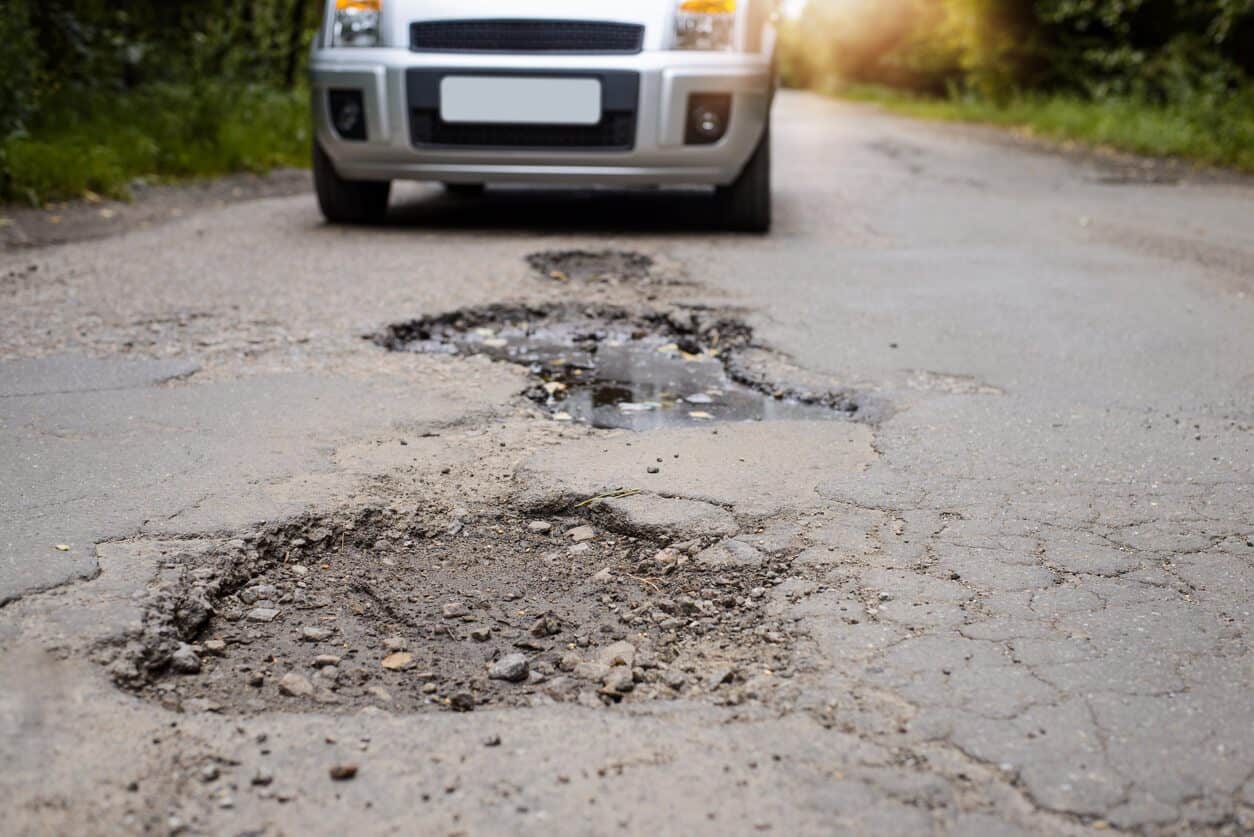
Spring has sprung, which means the outdoors are full of flowers, green grass, and — potholes? Unfortunately, potholes are common throughout New England this time of year. Formed by water seeping through cracks on the road, freezing, and then creating pockets, potholes can wreak havoc for drivers.
If you drive over a large pothole and suspect that your car may be damaged, it’s important to do a brief self-inspection. You should look for visual signs of damage, especially to the tires and rims. Potholes can cause disfigured, cracked, or bent rims, as well as bulges in the sidewall or rips and cuts on the tires.
The steering wheel should also be checked for misalignment. It may not be visible right away, so it’s important to monitor for any steering changes that occur as you continue driving. If you suspect that your car has been damaged by a pothole, we recommend making an appointment with your local mechanic and having the suspension checked for bent or damaged parts. At VIP auto, we offer free alignment checks, and brake and tire safety inspections to help you get an idea of what needs to be repaired.
In addition to visual signs of pothole damage, here are some other signs to be aware of:
Tire & Rim Damage
Tire and rim damage is the most common type of pothole damage. Tire repair cost varies greatly depending on the amount of damage. Typically, pothole tire damage is too great to be repaired, and the tire will need to be replaced. Depending on the vehicle and type of tires, such as Solar by TBC, a new tire is around $120.
For vehicles with larger tires, synch as Goodyear, Michelin, BF Goodrich, or Firestone, the cost can be around $300 to $500 per tire. New rims can cost anywhere from $100 (for a small tire with a steel wheel) to $600+ (for a larger tire with an alloy wheel).
Suspension & Steering
Hitting a pothole can knock off your wheel alignment. This can cause off-balance tires that can affect the quality of your ride, safety, and ability to steer. With a misaligned steering wheel, a car can pull to one side, be off-center, or have stiff steering. Misaligned tires also reduce fuel economy (since your tires drag instead of rolling) and will cause uneven wearing which can make your tires more susceptible to hydroplaning and losing traction when turning and accelerating. Uneven wear can reduce the life of your tire significantly, requiring new tires more frequently and costing more money in the long run.
Proper maintenance can prevent costly repairs in the future and help keep you safe. We recommend the following preventative maintenance:
Your local auto shop may have specialized programs, such as VIP’s Lifetime Alignment Service Warranty, or Tire Maintenance Plus++ programs. The lifetime warranty covers the entire life of the vehicle, not the tires. We’ve found that this program offsets its cost after just a few alignments.
The Tire Maintenance Plus++ program includes free tire, mounting, and balancing repairs. With the program, drivers can have unrepairable tires replaced for free within 6 months of purchase or 25% tread wear. This plan covers tires damaged due to potholes and other road hazards.
There are a few easy ways to prevent pothole damage to your vehicle.
Drive Safely
Speeding over a pothole can make potential damage worse to your vehicle. Drive slowly when on unfamiliar roads.
Be Alert on the Roads
Actively avoid potholes when you can. If you can’t avoid a pothole, it’s best to take your foot off the gas and glide over it. Don’t brake over a pothole — this can cause tires to take further damage or even pop. You should also avoid puddles since they often hide potholes. Lastly, give yourself distance from the driver in front of you — the more time you have to react to the pothole, the more likely you’ll be able to avoid it.
Keep Your Car Maintained
Deflated tires or a loose suspension can make damage from a pothole worse. It increases the chances of knocking something out of alignment or puncturing a tire tread.
If your car does sustain pothole damage, fear not. Our ASE-certified Certified Automotive Professionals can diagnose the issue and discuss repair options with you. Schedule a service appointment today to get started.
Visit us at one of over 70+ locations throughout the Northeast. Walk-ins Welcome!
Schedule Service Get a Free QuoteRead More
Read More
Read More
Read More
Be the first to know about deals, rebates, and more!
Log in or Create an account to save vehicles and more.
 All-Season
 All-Weather
 All-Terrain
 Winter
All-Season tires are versatile and suitable for warm and cool climates, but not recommended for extreme hot or cold weather conditions because of specific rubber components.
Like their name suggests, all-weather tires are versatile and can perform well in a variety of weather conditions and can be severe snow-rated.
With bigger treads than traditional all-season tires, all-terrain tires allow for both on and off-roading capabilities.
Winter tires are manufactured to perform well in snow, ice, sleet and other cold weather conditions. Winter tires are typically soft, with an intricate grooved tread pattern — made for holding compacted snow and creating traction — and are severe snow-rated.