Education Center
Here to Help. Always.
Roll into Summer with a Buy 3 Get 1 FREE on Vredestein Tires!
Shop Today!

This month we’re talking about blowouts.
We’ve all driven down the highway and seen shredded tires littering the sides of the road – leading many of us to wonder how it happened; could happen to us; and was everyone ok?
This month we chat with Michael Francis, ASE Certified Technician for VIP Tires & Service in Brewer, Maine, about tire blowout – disproving some myths and providing some tips to help decrease your chances of ever having to deal with a tire blowout.
Some common misconceptions about tire blowout
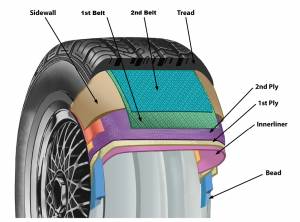
A common misconception regarding tire blowouts is that they occur because a tire is over pressurized. In fact, just the opposite is true – low air pressure typically is the culprit in a tire blowout situation. When a tire is underinflated, the interior structure of the tire is put at risk allowing the tire to flex beyond its limits. Check out this diagram of the interior of a tire from Rubber Manufacturers Association:
Three primary causes for a tire blowout include:
Because tire technology has improved tremendously over the years, the chances of a tire blowout are lessened, but this doesn’t mean you shouldn’t pay attention to your tires. If you think your tire might be damaged, your local VIP Master Technician can inspect your tire and examine it for interior damage.
How to help prevent a tire blowout
What can you do to make sure your tires are healthy, inside and out?
If your tires are low, you can stop by ANY VIP Tires & Service location. There is free air available and a Master Technician like Michael Francis will even come out and fill your tires for you. And the best part? As they check the pressure and fill your tires, they also will inspect them and ask you if there are any concerns – making sure you and your vehicle are safe on the roads.
This article is made possible by VIP Tires & Service. VIP is a complete automotive repair and service center. When you choose VIP for tires, auto inspection, automotive service, oil change, wheel alignment, brake repair services, muffler & exhaust repair, or any other car maintenance, you can rest assured that we will keep your vehicle running right. Open 7 days a week and with 56 locations throughout Maine, New Hampshire and Massachusetts, VIP is right around the corner when you need us
Visit us at one of over 70+ locations throughout the Northeast. Walk-ins Welcome!
Schedule Service Get a Free QuoteRead More
Read More
Read More
Read More
Be the first to know about deals, rebates, and more!
Log in or Create an account to save vehicles and more.
 All-Season
 All-Weather
 All-Terrain
 Winter
All-Season tires are versatile and suitable for warm and cool climates, but not recommended for extreme hot or cold weather conditions because of specific rubber components.
Like their name suggests, all-weather tires are versatile and can perform well in a variety of weather conditions and can be severe snow-rated.
With bigger treads than traditional all-season tires, all-terrain tires allow for both on and off-roading capabilities.
Winter tires are manufactured to perform well in snow, ice, sleet and other cold weather conditions. Winter tires are typically soft, with an intricate grooved tread pattern — made for holding compacted snow and creating traction — and are severe snow-rated.