Education Center
Here to Help. Always.
Buy 4 tires installed with Tire Maintenance++ and an alignment – save $100 INSTANTLY!
Shop today!
Oil changes, tire rotations, alignments – you already need them, so why not get rewarded while you’re at it?


As winter approaches, it’s important to be sure that you have the appropriate tires to handle the worst weather conditions. While we believe that every commuter in New England should have a good set of winter tires, you should also consider if you need a set of studded snow tires.
A type of winter tire, studded snow tires are designed to provide you with maximum traction on packed snow and icy roads. However, studded tires aren’t right for every condition, and some states restrict their use to certain times of year.
This guide will help you determine if investing in a set of studded snow tires is the right move for you. Let’s dive in.

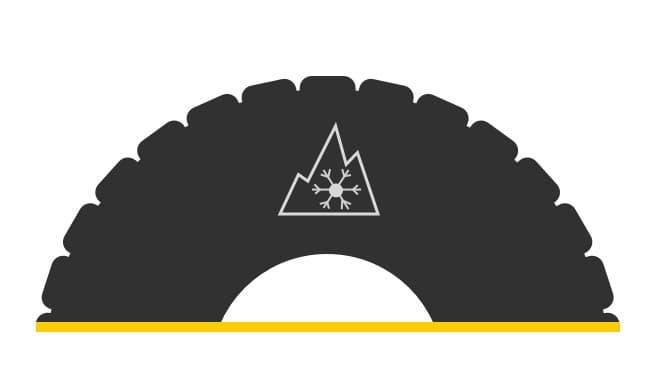
The terms “winter tires” and “snow tires” are interchangeable. Winter tires are distinct from all season tires by the industry-standard symbols on the tire sidewall:
You can also recognize winter tires by their open tread pattern that helps dispel snow, slush, and ice. They are manufactured with special rubber components that keep the tire flexible in cold weather, which provides maximum traction and stopping ability. This flexibility helps the tire maintain more contact with the road, greatly improving your control in cold weather conditions.
However, non-studded winter tires have limitations on icy and unplowed roads. They may not provide sufficient grip on hard-packed snow or ice.
Studded winter tires, also called studded snow tires, contain actual studs built into the tread of the tires. Often made of metal, these studs are small rivets that act similarly to cleats on a shoe, allowing the tire to dig into snow or chip into ice.
There are also studdable winter tires, which are winter tires that have molded holds where studs could be screwed into. These tires will operate as a regular winter tire on their own, but can be converted into studded winter tires by adding the appropriate tire studs.
Modern studded tires were first widely used in 1950s Scandinavia as small, nail-like inserts to increase the traction of winter tires on icy roads. Studded tires first took hold in the U.S. in the 1960s and enjoyed growing popularity through the 1970s. By the 1990s, new technical improvements enhanced their performance, while state governments started to pass restrictions on their use to limit excessive pavement wear.
Tire studs consist of two primary parts:
While the pins are usually made of tungsten carbide, tire studs can also be made from rubber or hard plastic.
| Toyo Observe G3-ICE Studded Tire
|
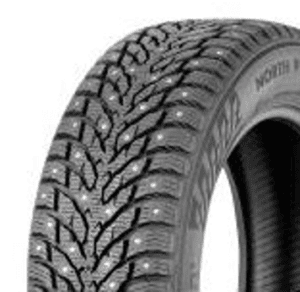
Nokian Tyres Nordman North 9 Studded Tire
|
Winter tire studs are manufactured in various lengths to match a range of hole depths within different makes of tires. You can identify different stud sizes by their Tire Stud Manufacture Index (T.S.M.I.) number, the stud’s overall length in millimeters (mm), and their housing color.
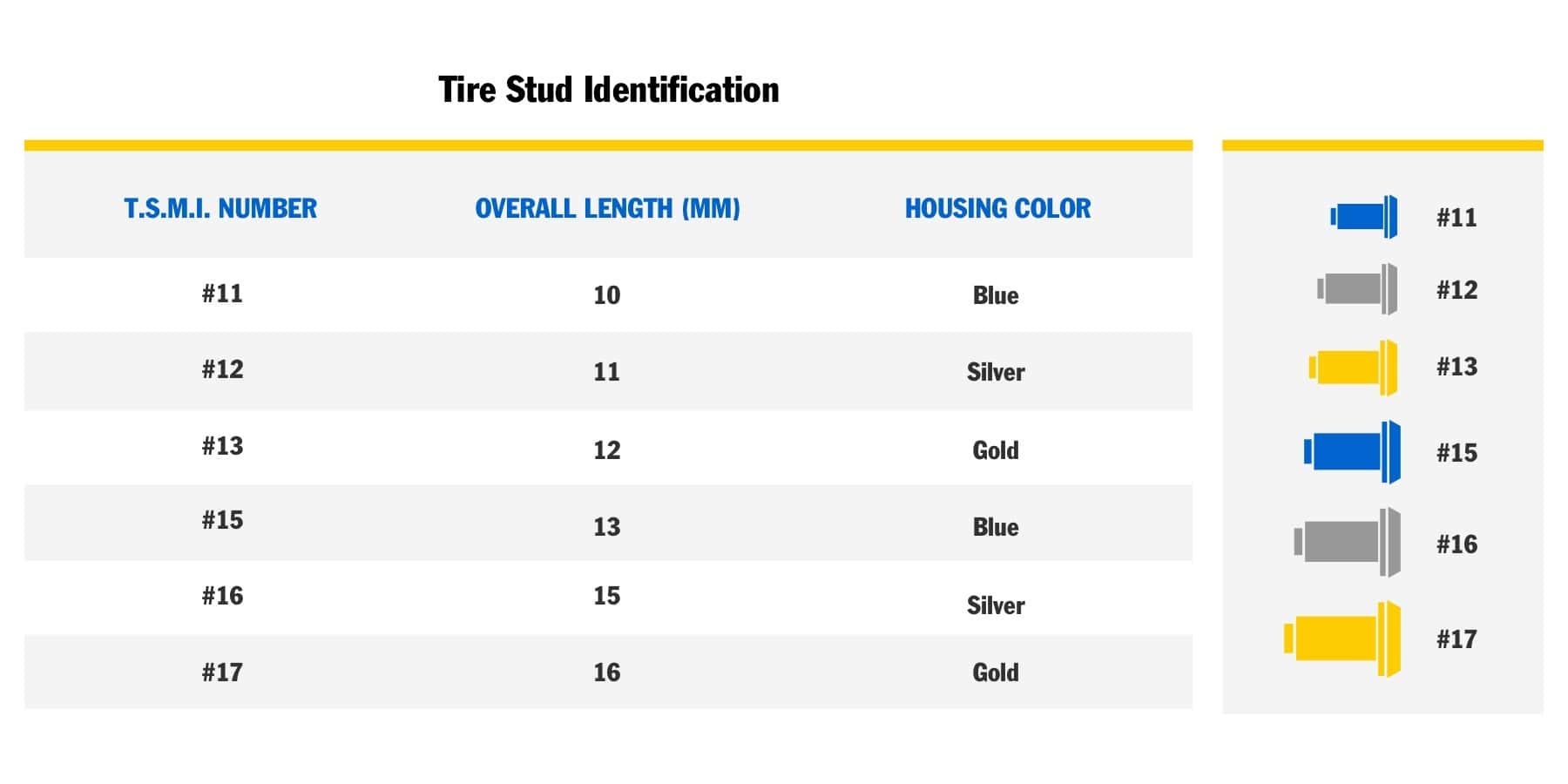
Studded winter tires will have anywhere from 80 to 100 studs per tire, each inserted into molded holes within the tire’s tread. A specialized stud gun spreads the rubber and inserts the stud so that the pin is the only element that protrudes from the tire surface.
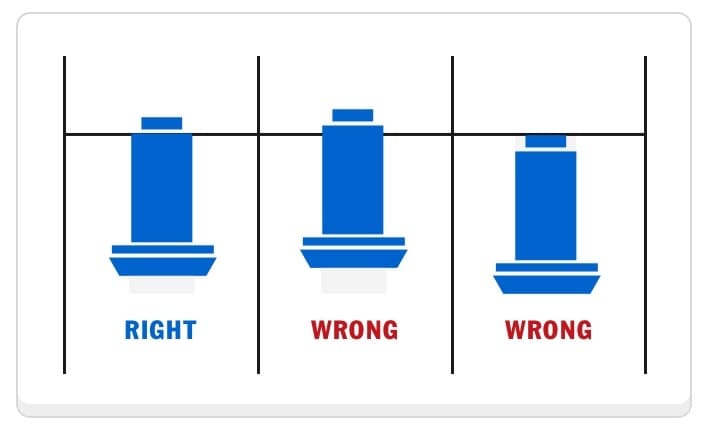
|
A correctly inserted stud. The tread rubber compresses around the stud’s flat head to hold the stud in place while the pin protrudes past the tire surface. |
An improperly inserted or oversized stud. Part of the stud’s body protrudes from the tire. This can cause additional friction and wear on the molded hole, enlarging it and eventually ejecting the stud. |
An improperly inserted or undersized stud. The pin is flush with or beneath the tire’s surface, causing no road impact and making the stud ineffective, until there is wear on the tire. |
Only studdable winter tires that have been engineered with preset locations (holes) can have studs installed. Do not attempt to insert studs into regular winter or snow tires, as this will damage the tire and compromise its performance and safety. Studdable winter tires are sold without studs, which must be acquired and installed separately.
While you can install studs into a studdable tire with the right equipment, professional installation is recommended. Required stud size will vary depending on the tire, with the appropriate stud size listed on the tire sidewall. Here is the step-by-step process professionals follow:
Stud installation, depending on the type of tire, can take up to one hour. Most shops and professionals will only stud new tires, as used tires may have pebbles or debris in the moldable holes, which could lead to a leak or flat when inserting a stud. For this reason, most shops may not remove tire studs. Once a studdable tire is studded, it remains a studded tire and should be swapped out for all-season or all-weather tires during the seasonal changeover.
Businesses typically do not pre-stud tires because many can be sold unstudded. If you want your tires studded, it’s a good idea to contact your local tire shop ahead of time and consider placing a deposit to reserve the service.
Sometimes studs can come loose, but this does not usually affect the tire’s integrity as long as the missing studs are properly replaced.
Just like winter tires, it is recommended that studded and studdable tires be installed when the average temperature is below 40 degrees. Be aware that studded tires have additional seasonal restrictions depending on the states you live in. This is for a few reasons:
Studded tires, while highly effective for traction on icy and snowy roads, are known to cause increased wear and tear on road surfaces. Their continued use can result in millions of dollars in road maintenance and repair costs for taxpayers. Additionally, the metal studs on these tires can create ruts in the pavement, which collect water and lead to hazards such as pooling, excessive tire spray, hydroplaning, and loss of vehicle control during wet weather conditions.
To mitigate these issues, each state has specific laws governing when and where studded tires can be used, with restrictions set by state legislatures. Below are the regulations for the four New England states serviced by VIP Tires & Services:
| Permitted | Restricted | Penalties for Violations | |
| Maine | October 2nd to April 30th | May 1st to October 1st | Fines up to $500 |
| Massachusetts | November 1st to April 30th | May 1st to October 31st | Fines up to $50 per offense |
| New Hampshire | Year Round | N/A | N/A |
| Vermont | Year Round | N/A | N/A |
Search your own state’s DOT page for further details on studded tire restrictions.
Should you invest in studded snow tires? That depends on a number of different factors. Ask yourself the following questions to see if studded tires are a good choice for you:
If your daily commute in the winter requires you to travel on icy or unplowed back roads, then studded tires start to make sense. If you’re mostly traveling on main roads or the highway, you may be better served with a set of regular snow tires.
There are some states, such as Wisconsin, Minnesota, and North Carolina, that do not allow studded tires at any time of year. If you regularly travel to those states during the fall or winter, it may be worthwhile to purchase regular snow tires. If you’re a resident of a state without restrictions, such as New Hampshire or Vermont, then a set of studded tires can make sense, especially if you live in a remote area.
Consider your regular commute in the winter. Are you able to stay home during heavy snowstorms or icy weather conditions or are you regularly out on the roads before most of the plowing is done? If you’re regularly driving in the worst conditions, then studded tires can be the safest and most sensible option.
Winter tires generally cost about the same as high-quality all-season tires, but studded versions can be more expensive due to the added materials and installation process. If you’re considering studdable tires, keep in mind that you’ll need to budget for both the studs and professional installation. While pricier, the added safety on icy roads can be worth the investment if you regularly face severe winter conditions.
Studded tires perform exceptionally well on icy or hard-packed snow but are less effective on bare pavement. If you live in an area where roads are regularly cleared, or temperatures often rise above freezing, studded tires may wear prematurely and cause unnecessary damage to the pavement. For roads that remain icy or frozen throughout winter, studded tires provide invaluable safety and traction.
| Non-Studded | Studdable | Studded | |
| How to identify | Blocky tread with fine slits that grip snow & push away slush | Similar pattern to winter tires with molded holes for studs | Similar pattern to winter tires w/ 60–120 small metal studs |
| Ideal conditions to drive in | Muddy, wet, mixed and light snow conditions | Muddy, wet, mixed and light snow conditions w/out studs | Packed snow and icy conditions |
| Advantages | Great for wintry conditions, won’t damage roads or produce loud noise | Same advantages as non-studded, but can have studs added to handle icy conditions | Best option for driving on packed snow and icy conditions |
| Disadvantages | Limited to no traction on ice or hard-packed snow | Limited to no traction on ice or hard-packed snow w/out studs | Lower performance in non-icy conditions, can damage road surfaces |
| Recommended tire options | Vredestein Wintrac | Sumitomo Ice Edge | Toyo Observe G3-ICE Studded |
“Also, seriously consider snow tires. These will give your car extra grip on snow and ice covered roads … Studless snow tires are quieter than studded and are effective in getting around on snow covered roads. Studded snow tires provide better grip on ice, but make sure you pay attention to wear and tear. Worn studs can poke through and ruin your tire (and your day).”
— VIP Master Tech Michael Corella (Source)
What are studded tires?
Studded tires contain actual rivets or “studs” built into the tread of the tires. Often made of metal, these studs dig into ice and hard-packed snow to provide extra traction.
Do I need studded tires?
If you find yourself driving in icy conditions often during the winter months, either because of your location or other requirements of your commute, then you may want to invest in a set of studded winter tires.
What are the benefits of using studded tires?
Aside from using chains, studded winter tires provide the best possible traction in the worst snow and ice conditions. They provide greater control and more stopping power compared to regular winter or snow tires.
What are the drawbacks of studded tires?
Studded tires actually suffer in performance in conditions that aren’t ice or hard-packed snow, as they provide less surface contact with the road. Studded tires will also increase the wear on road surfaces, and so some states restrict when they can be used.
How long do studded tires last?
Like other tires, the life expectancy of a studded tire will depend on its usage. As long as they are used correctly — such as being used only on ice and packed snow-covered road surfaces — you can expect around 5 to 6 seasons of use.
Can tire studs be removed?
If the tires are relatively new, with significant remaining tread depth (more than 7/32”), it’s possible that it’s worthwhile to remove the studs. For older tires with less tread depth, it’s usually not worth the effort. Note that not all tire or service shops will offer a de-studding service.
The service experts at VIP Tires & Service recommend that you should only install and use studs if you feel there’s a distinct performance and traction advantage in doing so. If you want to discuss your options for winter, studdable, and studded tires, contact one of our Certified Automotive Professionals at any time.
Visit us at one of over 70+ locations throughout the Northeast. Walk-ins Welcome!
Schedule Service Get a Free QuoteRead More
Read More
Read More
Read More
Be the first to know about deals, rebates, and more!
Log in or Create an account to save vehicles and more.
 All-Season
 All-Weather
 All-Terrain
 Winter
All-Season tires are versatile and suitable for warm and cool climates, but not recommended for extreme hot or cold weather conditions because of specific rubber components.
Like their name suggests, all-weather tires are versatile and can perform well in a variety of weather conditions and can be severe snow-rated.
With bigger treads than traditional all-season tires, all-terrain tires allow for both on and off-roading capabilities.
Winter tires are manufactured to perform well in snow, ice, sleet and other cold weather conditions. Winter tires are typically soft, with an intricate grooved tread pattern — made for holding compacted snow and creating traction — and are severe snow-rated.